June 23, 2026 • Petra Andersen • 9 min reading time • Prices verified June 25, 2026
Showing Off Your Collection Right: Display Stands, Specimen Cases, and Storage That Protects What You've Polished
If you’ve just polished your first batch of tumbled stones — or you’ve been collecting minerals for a couple of years and your windowsill is running out of room — you’ve probably hit the same realization: display is half the hobby. A gorgeous amethyst cluster (a purple crystalline quartz formation that’s one of the most popular mineral specimens around) or a cabinet-grade tourmaline (a complex silicate mineral prized for its vivid color range) deserves to be seen at the right angle, protected from dust and household humidity, and stored so it doesn’t chip against a neighbor on a crowded shelf. This guide walks you through the practical decision stack: display stands and risers for individual pieces, enclosed cases for serious collections, and storage solutions that protect the work you’ve already put in. We’ll name real tradeoffs, show the math where it matters, and end with a clear decision framework so you leave knowing exactly what to buy next.
Display Stands and Risers: The First Upgrade Most Collectors Skip Too Long
A display stand — any platform, peg, or support that holds a specimen at a chosen angle — does more than just elevate a rock. It communicates that you understand your piece: its best face, its natural growth direction, its visual center of gravity. Collectors who skip this step often find that a $200 rhodochrosite (a pink manganese carbonate mineral with distinctive banded or crystalline forms) looks like a $20 piece sitting flat on a shelf.
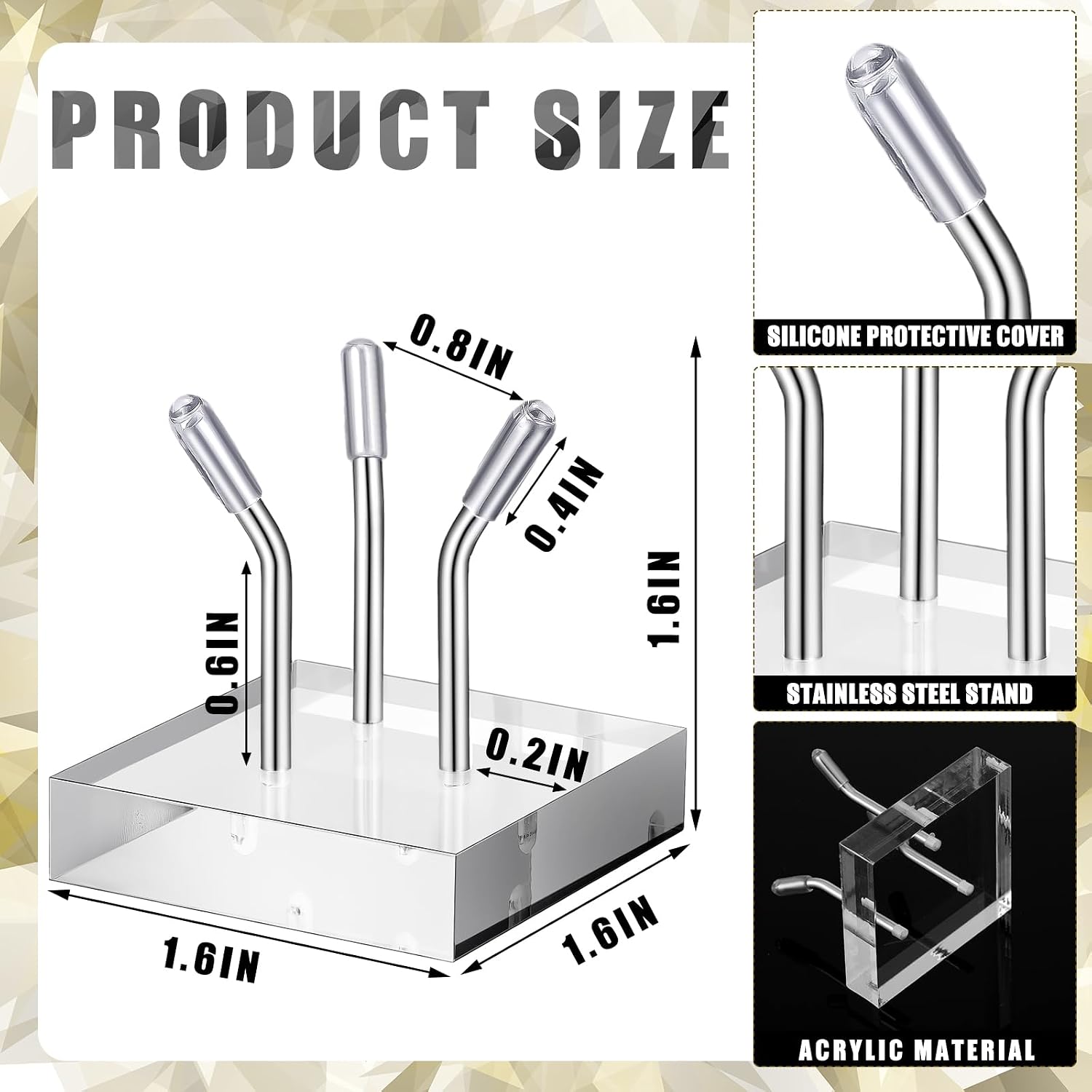
Acrylic peg stands are the workhorse of the hobby. They come in clear and black, in diameter sizes typically ranging from 6mm to 25mm, and cost roughly $0.50–$3.00 per stand at quantities lapidary supply houses like Kingsley North carry. The Kingsley North Spring 2026 catalog lists bulk packs of clear acrylic rod stands starting under $15 for a dozen — a meaningful price point for anyone building out a display shelf systematically. The tradeoff: acrylic scratches over time, especially if you’re repositioning pieces frequently, and the peg diameter has to match the specimen’s natural cavity or low point, which sometimes means buying multiple sizes before one fits cleanly.
Wire ring stands (sometimes called mineral ring stands — a coiled wire loop that cradles spherical or egg-form pieces) are the right call for polished spheres, crystal balls, or rounded cabochon rough. Owners consistently report that wire ring stands feel less stable than peg stands for irregular specimens, but for any sphere over 60mm diameter, they’re genuinely the better choice. Wire stands in brass-finish or black powder coat typically run $2–$5 each at specialty retailers.
Wooden easel stands and flat-base acrylic easels are where display shifts into presentation territory. If you’re staging a piece for sale, for a gem show table, or as a focal point in a display case, a small wooden or acrylic easel — the type that holds the specimen at roughly a 70-degree angle — creates an implied “look here” that flat placement never achieves. The Mineralogical Record’s exhibiting standards guide notes that angled presentation at 60–75 degrees from horizontal is the most consistent approach among competitive exhibitors for flat-face specimens like amethyst slices or stalactite cross-sections.
One rule that holds across stand types: the stand should disappear visually. If you’re staring at the stand, it’s the wrong color, size, or style. Clear acrylic recedes on light backgrounds; black acrylic or black wire recedes on dark backgrounds. Match your display surface before ordering in bulk.
Enclosed Specimen Cases: When a Shelf Isn’t Enough
Once your collection includes pieces above roughly $100 in replacement value, or once you’re displaying anything with fragile crystal terminations (the pointed tips of crystals, which break easily), enclosed cases stop being optional and start being a straightforward insurance decision.
By the numbers:
- Acrylic display cases (cube or box format): $8–$45 each depending on size, from 4” cube to 12”×12”×8”
- Mirrored-base display domes (glass bell jar over mirrored acrylic): $15–$60 per unit
- Locking multi-specimen collector’s cabinets (wood-frame, glass-front): $180–$600 for hobby-grade units
- Museum-quality UV-filtering acrylic display cases: $80–$300+ per unit
The GIA’s gem and mineral storage recommendations specifically flag UV exposure as a damage risk for color-sensitive specimens: fluorite (a calcium fluoride mineral famous for vivid purple, green, and blue tones) is particularly vulnerable to fading under prolonged fluorescent or window light. Smithsonian Magazine’s 2024 piece on museum mineral collections confirms that major institutions have moved toward UV-filtering glazing as a baseline standard even for secondary displays, not just flagship cases. For a private collector, that translates to a practical rule: if a specimen’s color is why you bought it, it belongs behind UV-filtering acrylic, not standard glass.
The acrylic-vs-glass question comes up constantly in collector communities. Published specs are clear: standard float glass blocks roughly 25–50% of UV-A radiation depending on thickness; UV-filtering acrylic (often sold as “museum acrylic” or “conservation acrylic”) blocks 98–99% of UV up to 380nm per manufacturer data sheets from brands like Optix and CYRO. Glass wins on scratch resistance and visual clarity at a distance. Acrylic wins on UV protection, lighter weight for wall-mount cases, and lower cost. For most intermediate collectors, UV-filtering acrylic is the decision: the protection premium over standard acrylic is modest (roughly 1.5–2× the base cost), and the risk it mitigates — irreversible color loss in fluorite, rose quartz, or kunzite — is real.
Locking display cabinets are the right step when you’ve moved from “collection” to “investment.” A wood-frame, glass-front collector’s cabinet with adjustable shelves and a lock typically runs $180–$400 in hobby-grade formats. These aren’t the furniture-grade display cases at $800+; they’re purpose-built for what collectors actually need: adjustable shelf spacing (critical when your specimens range from a 2cm thumbnail — collector shorthand for a specimen small enough to fit under a human thumbnail — to a 25cm cabinet-size piece), interior lighting provisions, and enough depth to accommodate matrix specimens (minerals still attached to their host rock, often displaying more naturally but requiring more depth clearance).
Mindat.org’s collection care FAQ recommends keeping enclosed cases in rooms where relative humidity stays between 40–55% — relevant in humid climates or basements, where pyrite and marcasite specimens (iron sulfide minerals that can oxidize and crumble in high humidity, a process collectors call “pyrite disease”) will deteriorate noticeably faster in an unsealed environment than in a properly closed case with a silica gel packet maintained at correct saturation.
Storage That Protects What You Haven’t Displayed Yet
Not everything in a collection is on display at once. Rough waiting for the wheel, duplicates for trading, specimens still being identified — all of this needs storage that prevents contact damage (chips from pieces knocking together), moisture infiltration, and the slow abrasion that happens when wrapped stones shift in a drawer.
The foam-lined flat-drawer system is the standard that serious collectors and the International Gem Society’s lapidary reference both point to: shallow drawers, each lined with closed-cell foam (polyethylene or cross-linked polyethylene foam, which doesn’t off-gas acids that can damage specimens the way open-cell urethane foam can), with each specimen in its own cut-out cavity. Flat-drawer cabinets in the $150–$400 range are available from lapidary supply vendors and double as both storage and a secondary display format — open a drawer, and you’re looking at a tray of organized specimens.
For rough material — unpolished stone waiting to be worked — padded compartment boxes and divided plastic storage cases protect against contact damage while making it easy to sort by species, source, or project status. The key spec to look for: dividers that are removable or repositionable, so the box doesn’t become obsolete when your rough sizes change.
Wrapping individual specimens in tissue or microfoam (the thin polyethylene foam sheet sold in perforated rolls) before boxing them is standard practice for anything being transported or stored long-term. The Mineralogical Record’s exhibiting guide notes that even brief storage in bubble wrap with direct plastic-to-specimen contact can transfer plasticizer residue onto sensitive surfaces over months — a genuine risk for polished malachite (a copper carbonate mineral with vivid green banding) or any specimen with a high-gloss finish.
Labels and provenance documentation belong in the storage conversation, not as an afterthought. A specimen without a label is worth less — both monetarily and intellectually — than the same specimen with a clear locality, date acquired, and source notation. A standard collector’s label system: small cardstock labels in the cavity with the specimen, a numbered master log (a simple spreadsheet or dedicated app), and a photo archive. This takes fifteen minutes to set up for a new piece and prevents the common scenario of owning a beautiful mineral you can’t identify or value accurately three years later.
The Decision Framework: If X, Then Y
You’re likely in one of a few positions right now, and the right purchases are different for each:
If your collection is under 30 pieces and under $500 total value: Acrylic peg stands in two sizes (small and medium) and a set of ring stands for any spheres. Skip the enclosed cases for now unless you have direct sunlight or a humid storage environment. Budget: $30–$60 covers the stand library.
If you have pieces above $100 each or anything with fragile terminations: UV-filtering acrylic cube cases for your highest-value or most fragile specimens are the non-negotiable next step. Budget $15–$45 per piece for cases; prioritize fluorite, kunzite, rose quartz, and anything with sharp crystal points.
If you’re building a collection you plan to keep or sell at a premium: A locking display cabinet with adjustable shelves and an interior lighting provision is worth the $200–$400 entry price. Pair it with a foam-lined drawer system for rotation storage, and establish a label and photo archive from day one. This is the infrastructure that separates a serious collection from a pile of rocks — and it pays off directly at a gem show table or in a private sale, where provenance documentation and professional presentation consistently command higher prices, per dealer consensus reported through Weinrich Minerals and iRocks listing practices.
If you’re in a high-humidity environment (basement, coastal, or anywhere above 60% RH regularly): Add silica gel packets to any enclosed case and rotate them on a schedule. Pyrite and marcasite pieces specifically need to come out of general storage into a humidity-controlled case, or the deterioration timeline is months, not years.
The best display setup is the one you’ll actually maintain. Start with stands, add cases where the value justifies it, and build toward a storage system that makes every piece findable, labeled, and protected — because the collection you can’t quickly find and explain is harder to enjoy, harder to sell, and harder to share.