May 12, 2026 • Petra Andersen • 9 min reading time • Prices verified June 25, 2026
National Geographic Rock Tumbler Family Compared: Hobby, Starter, Professional, and Platinum — Which One Is Actually Worth It
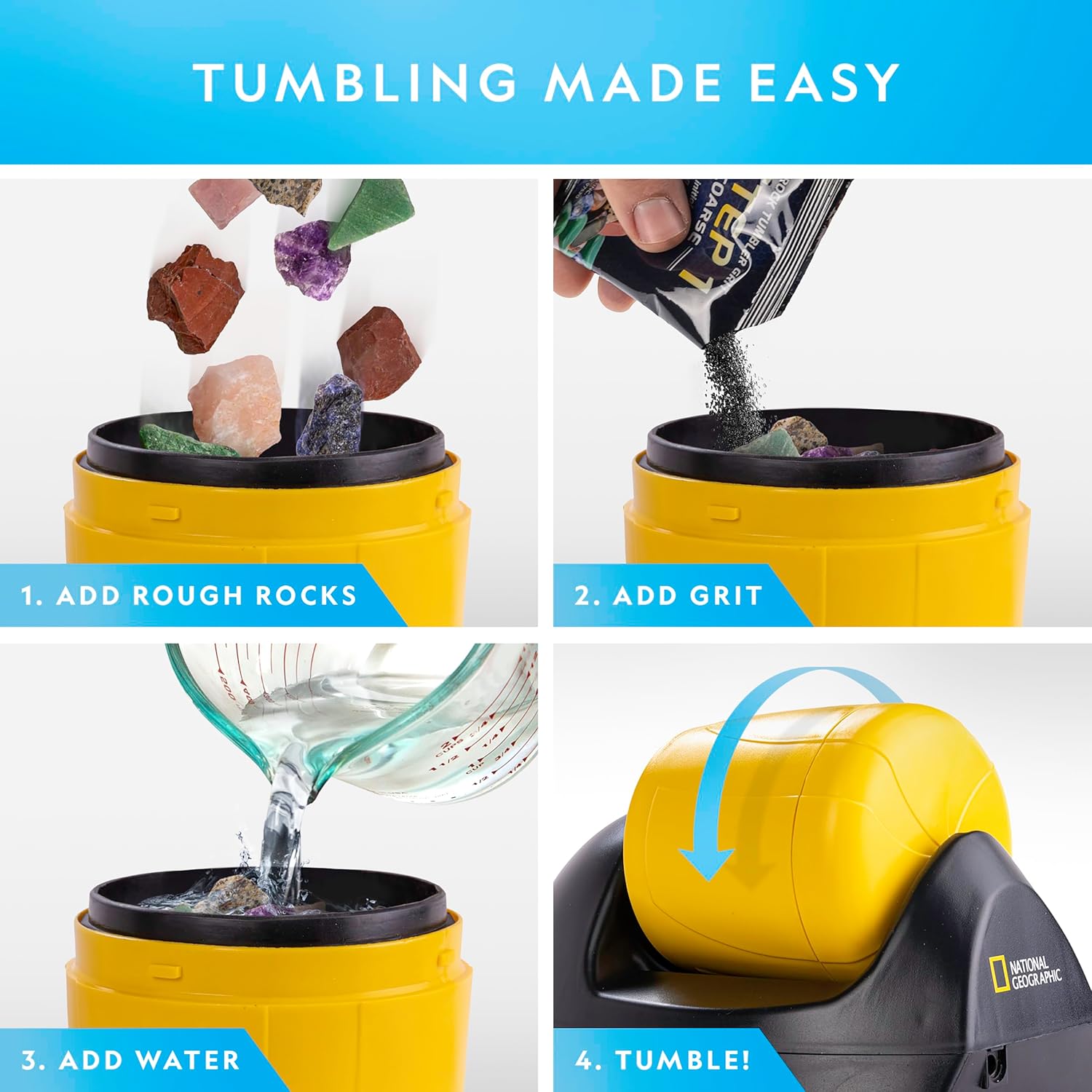
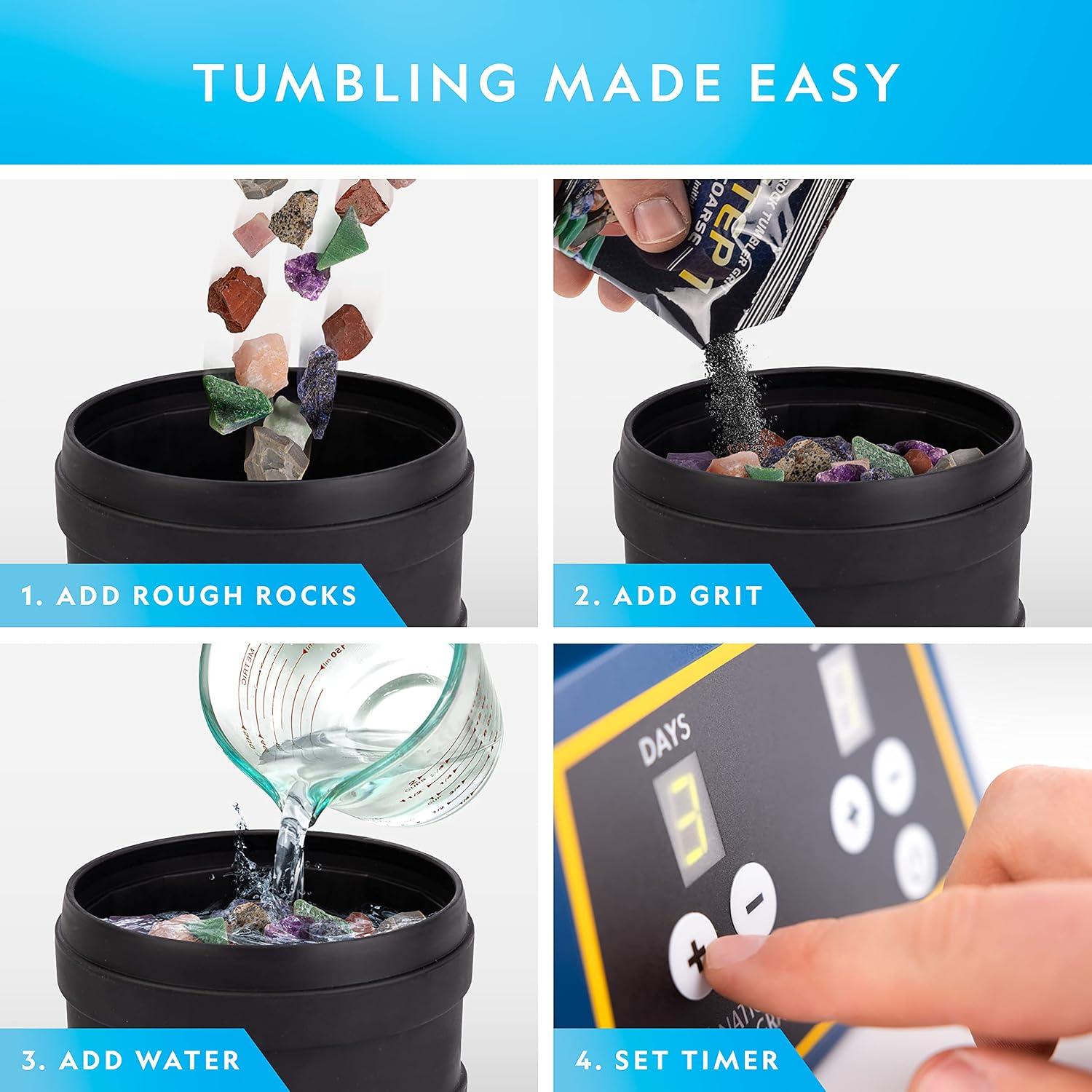
If you’ve ever picked up a smooth, glossy stone from a river and wondered how rocks get that way, you already understand the basic appeal of a rock tumbler — a machine that mimics thousands of years of water and sand erosion in a few weeks by tumbling rough stones with progressively finer abrasive powders called grit. National Geographic has been one of the most visible entry-level brands in this space for years, sold in toy stores, big-box retailers, and online. But “National Geographic tumbler” isn’t one product — it’s a family of four distinct machines, ranging from about $35 to over $150, all marketed under the same trusted brand name. If you’re deciding which one to buy — or whether to buy one at all versus stepping up to a Lortone or similar workhorse — this comparison lays out exactly what you’re choosing between.
| EDITOR'S PICK[National Geographic Rock Tumble…](https://www.amazon.com/dp/B0BSP9ZQWW?tag=greenflower20-20) | Mid-tier[National Geographic Starter Roc…](https://www.amazon.com/dp/B01I56RV0C?tag=greenflower20-20) | Budget pick[NATIONAL GEOGRAPHIC Rock Tumble…](https://www.amazon.com/dp/B017L46G9G?tag=greenflower20-20) | |
|---|---|---|---|
| Capacity | 3 lb | — | 20 lb |
| Motor Speed | 3-speed | — | — |
| Timer | 9-day | — | — |
| Leak-proof | — | ✓ | — |
| Rocks Included | ✓ | ✓ | — |
| Price | $89.99 | $41.99 | $18.99 |
| See on Amazon → | See on Amazon → | See on Amazon → |
What the National Geographic Line Actually Includes
It helps to name all four models clearly before comparing them, because the lineup has shifted and the names are frequently confused in search results and review threads. As of mid-2026, National Geographic markets the following rotary tumblers — rotary meaning the barrel rolls end-over-end, the most common beginner design:
- Hobby Rock Tumbler — the entry baseline, single-barrel, approximately 0.9 lb rough capacity
- Starter Rock Tumbler — slightly repackaged version with similar specs, often bundled with more grit
- Professional Rock Tumbler — dual-barrel design, larger motor, increased rough capacity
- Platinum Rock Tumbler — their flagship consumer unit, marketed as a significant upgrade over the standard line
All four are manufactured under the National Geographic brand via a parent licensing arrangement — they are not produced in-house by a dedicated lapidary manufacturer the way Lortone or Thumler’s units are. That distinction matters, and we’ll come back to it.
Side-by-Side: The Numbers That Actually Matter
Before getting into nuance, here’s the core comparison on the specifications that drive tumbling outcomes. Capacity figures and drive system descriptions are drawn from the Kingsley North product catalog, National Geographic tumbler listings, 2025–2026.
| Model | Barrel Capacity | Barrels | Drive System | Approx. Street Price |
|---|---|---|---|---|
| Hobby | ~0.9 lb rough | 1 | Single belt, light motor | ~$35–$45 |
| Starter | ~0.9 lb rough | 1 | Single belt, light motor | ~$40–$55 |
| Professional | ~2 lb rough (combined) | 2 | Reinforced belt drive | ~$80–$100 |
| Platinum | ~2 lb rough (combined) | 2 | Upgraded motor and belt | ~$120–$160 |
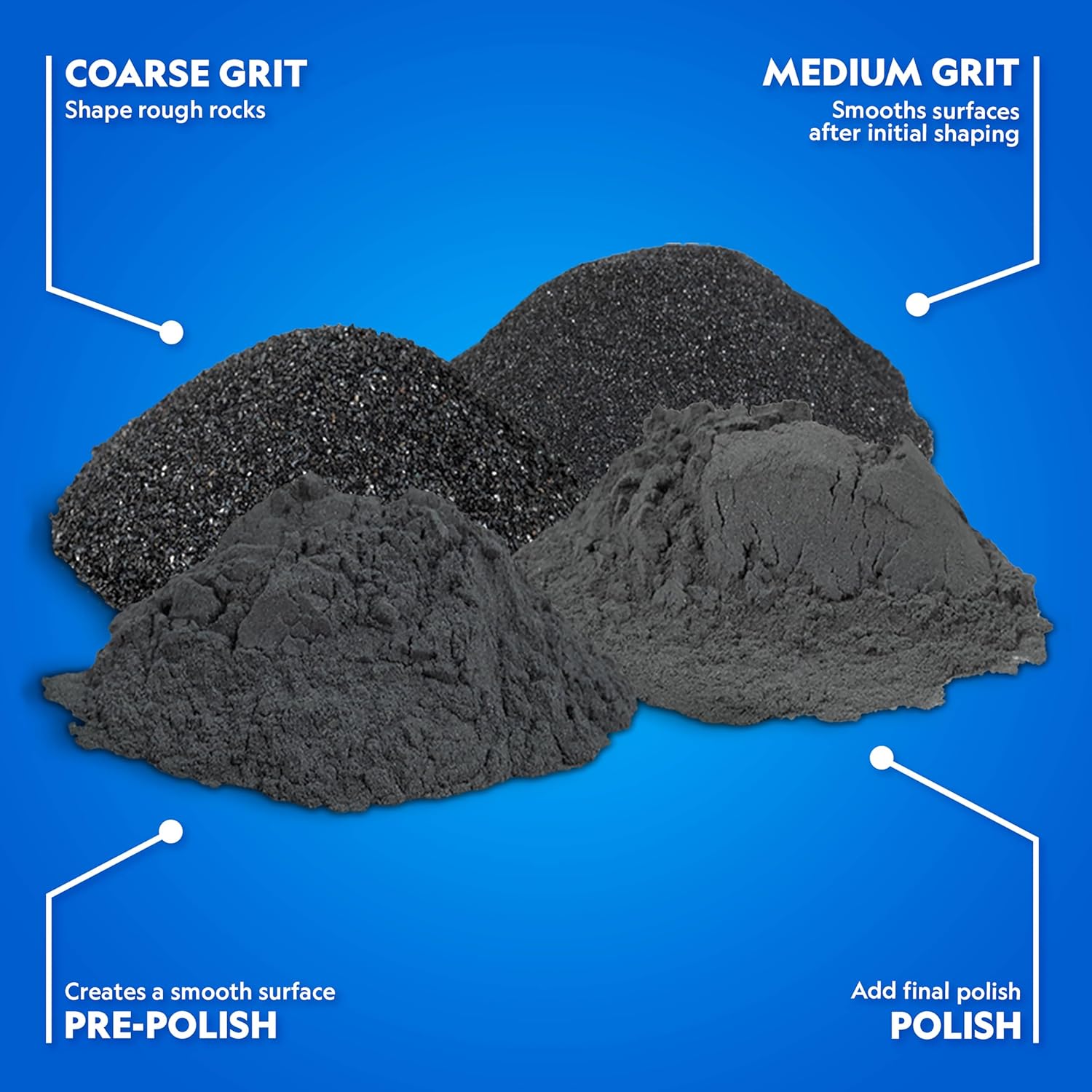
A few things jump out immediately. First, the Hobby and Starter are functionally the same machine — same barrel volume, same drive system. The Starter’s higher price reflects a more complete grit kit (a four-stage sequence of coarse, medium, fine silicon carbide, and polish) rather than a meaningfully different machine. Second, the jump from single-barrel to dual-barrel (Professional and Platinum) isn’t just about running more rock — it’s about workflow. Dual barrels let you stage two batches simultaneously, which matters once you’re tumbling more than a pound of rough at a time.
Model-by-Model: Honest Assessments
The Hobby and Starter Tumblers
NATIONAL
$18.99
In stock on Amazon
Check price on AmazonThe Gem Society’s Rock Tumbling Fundamentals overview frames entry tumblers candidly: small-capacity machines are genuine learning tools but come with real limitations in motor durability and barrel seal longevity. That assessment tracks with what aggregated buyer reviews show across retail listings.
Owners of the Hobby and Starter units consistently report two failure modes: barrel lid leaks and motor burnout on extended runs. The rubber seal degrades faster than the motor wears out, especially if grit or small stone chips get trapped in the seal groove. Rock tumbling isn’t a quick process — the coarse-grit stage alone typically runs 7–10 days continuously. Across long-run reviews, a meaningful percentage of these units do not survive a full four-stage tumble cycle on their first attempt with dense stones like jasper or agate, which are heavier per pound than the softer stones sometimes included in starter kits.
For soft-to-medium hardness stones — calcite, obsidian, aventurine, softer agates — owners consistently report acceptable results: smooth, polished stones with decent luster. The grit kits bundled with the Starter model are functional, though the silicon carbide sequences run thin on quantity. Kingsley North stocks lapidary-grade silicon carbide grit in full four-stage sequences if you need to resupply before a second batch.
Bottom line on Hobby and Starter: These are real tumblers, not toys, but they sit at the bottom of the durability curve. If you’re buying for a child who may or may not stick with the hobby, the price makes sense. If you’re an adult certain you want to tumble rock regularly, the Hobby and Starter represent a questionable value — you may spend $45 now and $120 more in six months.
NATIONAL
$18.99
In stock on Amazon
Check price on AmazonThe Professional Tumbler
National
$41.99
In stock on Amazon
Check price on AmazonThe dual-barrel Professional model is where the National Geographic line starts to make a more coherent argument for an intermediate buyer. Owners report the motor runs noticeably quieter and with more consistent torque under load, and the dual-barrel setup genuinely changes how you approach batch planning. You can run coarse grit in one barrel and a polishing stage in the other simultaneously — a workflow efficiency that matters once you’re buying rough by the pound rather than the handful.
Lapidary Journal Jewelry Artist’s beginner equipment roundups from 2024–2025 issues have noted the Professional as a reasonable bridge machine for buyers who want to learn tumbling before committing to a purpose-built lapidary tumbler. The caveat: barrel capacity still tops out well below what you’d want for production-scale or club use, and the drive belt and barrel seals remain the weak points relative to machines built specifically for lapidary work.
At a street price of $80–$100, the Professional occupies a useful position. It costs roughly twice the Starter but delivers meaningfully better motor longevity and the dual-barrel workflow advantage. For budget-constrained adult buyers who’ve decided they want to tumble regularly, this is the most defensible purchase in the National Geographic family.
National
$41.99
In stock on Amazon
Check price on AmazonThe Platinum Tumbler
National
$89.99
In stock on Amazon
Check price on AmazonThe Platinum is National Geographic’s attempt at a premium offering, and it’s worth examining the upgrade case carefully because the street price approaches $150 — territory where dedicated lapidary tumblers begin to enter the conversation as alternatives.
What the Platinum actually adds over the Professional: more reinforced barrel construction (owners note the lids seat more securely), a reportedly more robust motor drive assembly, and in most configurations a more complete included grit and polish kit. Across aggregated owner accounts, the pattern is that Platinum buyers report fewer mid-cycle leaks and a slightly better long-run motor survival rate with hard silicate rough.
The Mineralogical Record’s reader equipment surveys (Volumes 54–55) noted that brand-name consumer tumblers at this price tier outperform their entry siblings but remain meaningfully below dedicated lapidary equipment on cycle-survival rates when tumbling hard silicate material like agate or jasper. That finding is consistent with what Platinum owners report: the machine is the best in the National Geographic family, but it still has the family’s structural limitations.
At $120–$150, you are within saving distance of a Lortone 3A (street price approximately $350–$400 through lapidary suppliers including Kingsley North). For a committed hobbyist planning to tumble more than casually, the Platinum’s value proposition depends almost entirely on whether you need a machine now rather than in a few weeks.
National
$89.99
In stock on Amazon
Check price on AmazonThe Decision That Actually Matters: National Geographic vs. Stepping Up
Here’s where an intermediate buyer’s real calculus lives. The National Geographic family is essentially making you a time-versus-money offer: spend less now, accept higher risk of early failure and lower throughput.
Run the math on a 12-month horizon:
If you’re tumbling regularly — even one batch per month — the Hobby and Starter’s failure-probability profile means you’re likely replacing the machine within a year. Two Starter units at $45 each costs $90 with zero added capability. The Professional at $90 is a better single purchase. But at $150 for the Platinum, you’re entering a zone where the Lortone 3A’s reputation for running continuously for years without motor or seal failure starts to look like the rational long-term buy.
The Gem Society’s Rock Tumbling Fundamentals overview makes a point that applies directly here: the cost per pound of polished stone drops significantly when you’re not replacing underpowered machines mid-hobby. Lapidary Journal Jewelry Artist’s equipment roundups from 2024–2025 make the same observation from a club-instructor perspective — beginners who start on underpowered equipment often attribute poor results to their own technique rather than equipment limits, which discourages them from continuing the hobby at all.
The availability argument for National Geographic: These machines are sold at Target, Walmart, and major online retailers with no lead time and easy returns. A Lortone 3A requires ordering from a lapidary supplier such as Kingsley North and may carry delivery windows of two to four weeks depending on stock. If you’re buying for a gift, an event, or simply need to start this weekend, the availability advantage is real and should factor into your decision.
Clear “If X, Then Y” Decision Rules
If you’re buying for a child or household newcomer who may not stick with the hobby: The Starter is the right call. The grit kit is more complete than the Hobby’s, the price is low enough that a failed motor isn’t a serious financial loss, and the machine is genuinely capable of producing polished stones from beginner-friendly soft material.
If you’re an adult who knows you want to tumble and your budget is under $100: Buy the Professional, not the Hobby or Starter. The dual-barrel setup and more durable drive system give you meaningfully more usable life per dollar, and the workflow improvement will feel significant once you’ve completed your first full cycle.
If your budget is $100–$150 and you’re choosing between the Platinum and alternatives: Pause before buying the Platinum. Check current stock at Kingsley North for the Lortone 3A. If the Lortone is available within your timeline at or near $350–$400, the rational move for a committed hobbyist is to wait and save the difference. If you genuinely need a machine within a week and the Platinum is on the shelf, it’s an acceptable purchase — just know you’re buying the best of a consumer-tier family, not a lapidary-grade machine.
If you’re already tumbling regularly and evaluating an upgrade path: The National Geographic family is not your upgrade. It’s a parallel product tier. Your path runs through Lortone, Thumler’s, or a vibrating tumbler like the Lot-o-Tumbler for the next step up in throughput and longevity.
The National Geographic line is a legitimate entry point to lapidary — it’s just important to buy the right model for your actual situation, and to know exactly where the ceiling is before you hit it.