May 12, 2026 • Petra Andersen • 9 min reading time • Prices verified June 25, 2026
Rotary Tools for Lapidary Work: Dremel 4300, Flex Shafts, and Diamond Bit Sets That Actually Hold Up to Stone
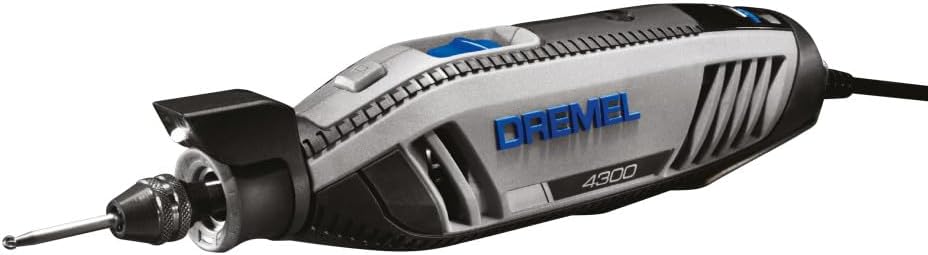
If you’ve ever wanted to carve details into a piece of rough agate, engrave initials into a finished cabochon (a polished, dome-shaped stone), or open up a drilled hole in a mineral specimen to clean it up for display — you need a rotary tool. A rotary tool is simply a handheld or bench-mounted motor that spins a small bit at high speed; swap the bit, and the same machine can drill, grind, carve, or polish. For lapidary work — the art of cutting, shaping, and finishing stone — rotary tools fill the gap between a full-size cabbing machine and hand work. They’re how you add texture to a carving, clean matrix off a crystal cluster, or engrave a design into a cab before setting it. This guide compares the most practical options at the intermediate level: the Dremel 4300 as a handheld platform, flex shaft machines (a motor suspended above the work, with a long flexible cable delivering rotation to a handpiece you hold like a pen), and the diamond bit sets that either make or break the experience.
Why Stone Kills Ordinary Bits — and What “Diamond” Actually Means Here
Mineral hardness is measured on the Mohs scale — a 1-to-10 ranking where talc sits at 1 and diamond at 10. Most stones lapidary workers handle fall between 5 (apatite, some feldspar) and 9 (corundum — ruby and sapphire). Steel bits, carbide bits, and the accessory sets that ship in big-box store rotary kits are rated for wood, plastic, and occasionally soft metal. Against quartz (Mohs 7) or harder stones, they dull in minutes and generate heat that can crack the stone or burn a bonding agent like dop wax (a low-melt wax used to secure stone to a handle during work).
Diamond bits for rotary tools are sintered or electroplated: sintered bits have diamond grit bonded throughout a metal matrix (longer life, more consistent cut), while electroplated bits have a single layer of grit bonded to the surface (sharper initially, shorter total lifespan). The International Gem Society’s lapidary equipment overview notes that electroplated bits are adequate for occasional hobby use and offer lower entry cost, while sintered bits are the cost-effective choice for studio production volume. Kingsley North’s product listings as of May 2026 show electroplated sets starting around $15–$35 for a 10–20 piece assortment, while sintered ball and cylinder burrs run $8–$25 per bit.
By the numbers — diamond bit cost comparison (May 2026 market):
| Bit type | Entry set cost | Estimated lifespan on quartz | Best for |
|---|---|---|---|
| Electroplated (imported, 20-pc set) | $15–$35 | 2–6 hours of active cutting | Occasional carving, beginners |
| Electroplated (name brand, per bit) | $6–$12 | 4–10 hours | Intermediate hobby use |
| Sintered (name brand, per bit) | $10–$25 | 20–60+ hours | Production, hard stone focus |
The math is straightforward: if you’re spending more than a few hours a month on stone engraving, sintered bits pay back their premium within a single project cycle.
Dremel 4300: The Familiar Handheld Option
The Dremel 4300 is the most-searched rotary tool in the lapidary context, and for good reason — it’s widely stocked, the accessory ecosystem is enormous, and the variable speed range (5,000–35,000 RPM, per manufacturer specifications) covers the range needed for stone work. The universal chuck system (no collet swapping) means you can move between a 1/8-inch shank diamond burr and a 3/32-inch bit without pulling out a collet wrench, which matters when you’re mid-carving and need to switch profiles.
Where the 4300 shows limits in lapidary use: torque under load. Stone work at low RPM — say, 8,000–12,000 RPM with water cooling on a hard agate — asks the motor to maintain speed against resistance. Across aggregated owner reviews on lapidary and carving forums indexed through May 2026, the consistent pattern is that the 4300 handles soft-to-medium stone (up to roughly Mohs 7) without complaint, but users report perceptible speed drop on sustained cuts into harder material like jasper, obsidian, or any corundum work. That’s not a fatal flaw; it’s a use-case boundary.
The 4300 also runs warm on extended sessions. Owners report building in 10–15 minute rest intervals during long carving work to protect the motor. For a hobbyist doing occasional stone work alongside other projects, this is a manageable rhythm. For a studio doing four-hour production sessions, it becomes friction.
Retail pricing for the 4300 body has held between $75–$95 at major suppliers through early 2026 per Kingsley North and national hardware channel listings. A corded model at that price point, with the accessory flexibility it offers, represents a reasonable first rotary platform.
Flex Shaft Machines: The Studio Workhorse
A flex shaft machine separates the motor from the handpiece. The motor — typically rated in horsepower fractions, with 1/6 HP to 1/3 HP being common hobby-to-studio range — hangs from a hook or stand above the work surface. A flexible steel cable inside a housing runs down to a handpiece you grip like a pencil. The result: you’re never fighting the weight of a motor during detail work, heat stays away from your hand, and the handpiece itself is slim enough for fine control on small carvings.
The Foredom brand (Series TX and SR are the most referenced configurations in lapidary circles) is the consensus reference point. Lapidary Journal Jewelry Artist has covered Foredom equipment consistently across multiple tool reviews, and owner consensus in the lapidary community treats the Foredom SR — with a foot pedal for variable speed — as the entry point for serious stone carving and engraving work. The SR is rated at 1/6 HP with a 0–18,000 RPM range; the TX (1/3 HP) handles harder materials and longer sessions without thermal stress. Manufacturer-rated torque at low RPM on the flex shaft handpiece is meaningfully higher than a comparable handheld rotary, which is what makes the difference on Mohs 7+ stone.
The tradeoffs are real:
- Cost: Foredom SR body with standard handpiece runs $180–$230; the TX with a foot pedal controller is closer to $280–$340 at lapidary suppliers as of May 2026.
- Setup: You need somewhere to hang the motor. A small hook in a wood block works; a dedicated bench stand is cleaner. This isn’t portable the way a Dremel is.
- Handpiece wear: The standard Foredom handpiece uses a Jacobs chuck; collet handpieces (for less runout — sideways wobble — on precision bits) cost an additional $30–$60 and are worth considering if you’re doing fine engraving.
For a dedicated lapidary workspace — even a small one — the flex shaft is the better long-term platform. The cost gap over a Dremel 4300 is roughly $100–$200, but operators in long-run reviews consistently describe the flex shaft as the tool they wish they’d bought first.
Diamond Bit Sets Worth Naming
The bit set often matters more than the tool body. A good bit on a modest machine outperforms a worn bit on premium equipment. Here’s where owner consensus and supplier data point:
For electroplated general use: Sets from suppliers like Kingsley North carrying name-branded bits (Dedeco, Gesswein) hold up noticeably better than unmarked import sets at similar price points, per aggregated lapidary forum feedback indexed through 2026. The key spec to check is grit size — coarse (46–80 grit) for aggressive material removal, medium (120–220) for shaping, fine (320+) for pre-polish smoothing. A complete 3-grit set in ball, cylinder, and cone profiles covers most carving and engraving scenarios.
For sintered production bits: Inland Craft and Hi-Tech Diamond (both carry lapidary-specific sintered burrs) appear frequently in Lapidary Journal Jewelry Artist equipment coverage and in Kingsley North’s professional-tier listings. The price per bit is higher, but the cost-per-cut math favors them once you’re past casual use.
Bit profiles to prioritize for stone work:
- Ball (sphere) burrs: carving concave surfaces, cleaning matrix around crystals
- Cylinder (straight) burrs: flat-bottom cuts, channel engraving
- Tapered cone: detail lines, V-grooves
- Wheel/disc: undercutting, flat surface work on slabs
Water is not optional. Running diamond bits dry on stone accelerates wear significantly and risks thermal cracking in the stone. A simple plastic tub of water with the work submerged, or a slow drip from a small water line, is standard practice. The Mineralogical Record’s equipment technique references and the International Gem Society’s equipment overview both address water cooling as a baseline requirement for diamond abrasive work on stone, not an optional upgrade.
Decision Framework: Which Setup Fits Your Current Work
The tradeoffs above collapse into a few clear scenarios:
If you already own a Dremel and want to try stone work: Start with a quality electroplated bit set from a lapidary supplier rather than a hardware store. The Dremel 4300 is capable for occasional stone carving through Mohs 7, especially with water cooling and realistic session lengths. You’ll know within a few projects whether your use pattern demands more.
If you’re setting up a dedicated lapidary workspace and stone carving is a regular part of it: The Foredom SR or TX is the correct platform. The ergonomics, torque at low RPM, and long-session durability justify the price difference over the Dremel. Pair it with a small set of sintered burrs in the profiles listed above and a foot pedal controller for speed management.
If you’re doing production carving or teaching in a gem club setting: The Foredom TX with collet handpiece and a set of sintered bits in three grit stages is the configuration that consistently appears in professional shop writeups. The cost is real — $300–$400 for the complete setup — but it’s equipment that owners describe running for years without motor service.
If cost is the binding constraint right now: The Dremel 4300 with a quality electroplated bit set from Kingsley North or a comparable lapidary supplier is a functional entry into stone work at under $130 all-in. It’s not the last tool you’ll buy, but it’s not a dead end either.
The mineral matters too: if your primary material is softer stone — soapstone, selenite, howlite, or soft jasper under Mohs 6 — the handheld Dremel is genuinely adequate and the flex shaft premium is harder to justify. For quartz-family stones and harder, the flex shaft’s torque advantage becomes concrete and the upgrade calculus changes. Know your stone before you finalize your tool decision.